Turn a brief physical encounter with a LEGO figure into a digital journey that was instantly understandable, playful and worth sharing.
Augmented reality · Campaign product
LEGO
Turning a global Home Alone activation into an immediate scan-to-play augmented reality experience for LEGO.
ARProduct DesignCampaign
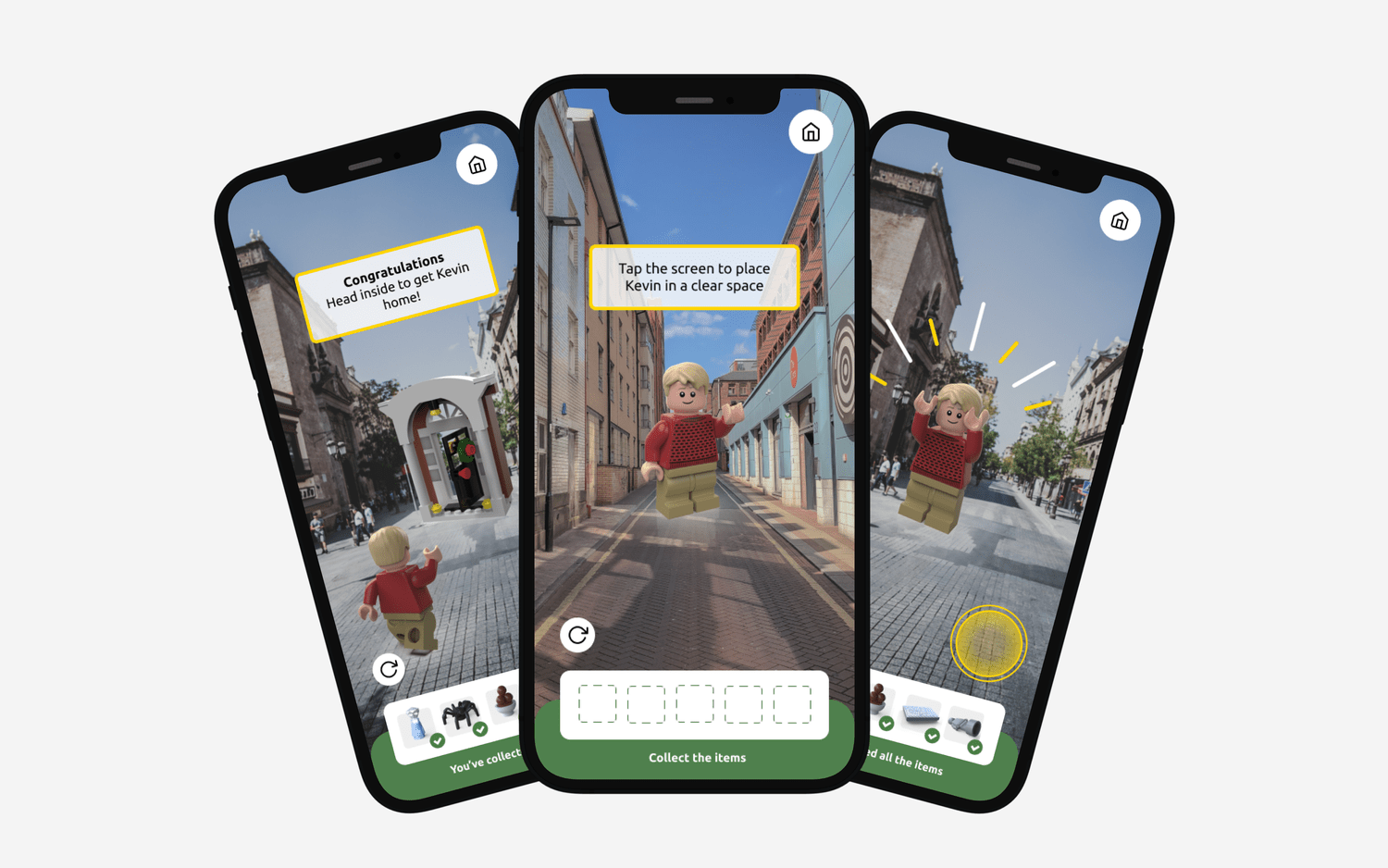
Project at a glance
My roleSole Product Designer on the AR web app
TeamSmall multidisciplinary agency team
DeliveryGlobal festive campaign
ScopeFlows, UI, prototyping and design QA
I designed the end-to-end web app, connecting QR entry, AR gameplay, competition entry and social sharing in one focused flow.
The experience helped drive strong participation, earned media reach and a substantial increase in visits to the product page.
87Kpeople found Kevin
54K+competition entries
16K+selfies created
326%increase in product-page visits
01
Turning a physical search into a digital experience
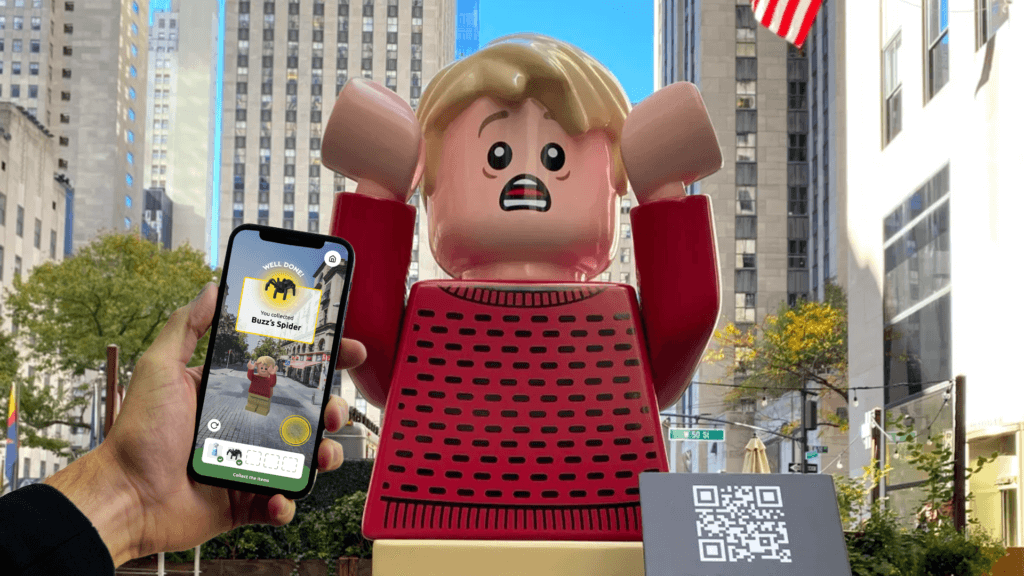
Six life-size LEGO figures of Kevin McCallister appeared in high-footfall locations across New York, Chicago, Toronto, Berlin, Brussels and Paris. Scanning the figure’s QR code opened a bespoke web app where people could play, enter a prize draw and share the experience.
02
The experience challenge
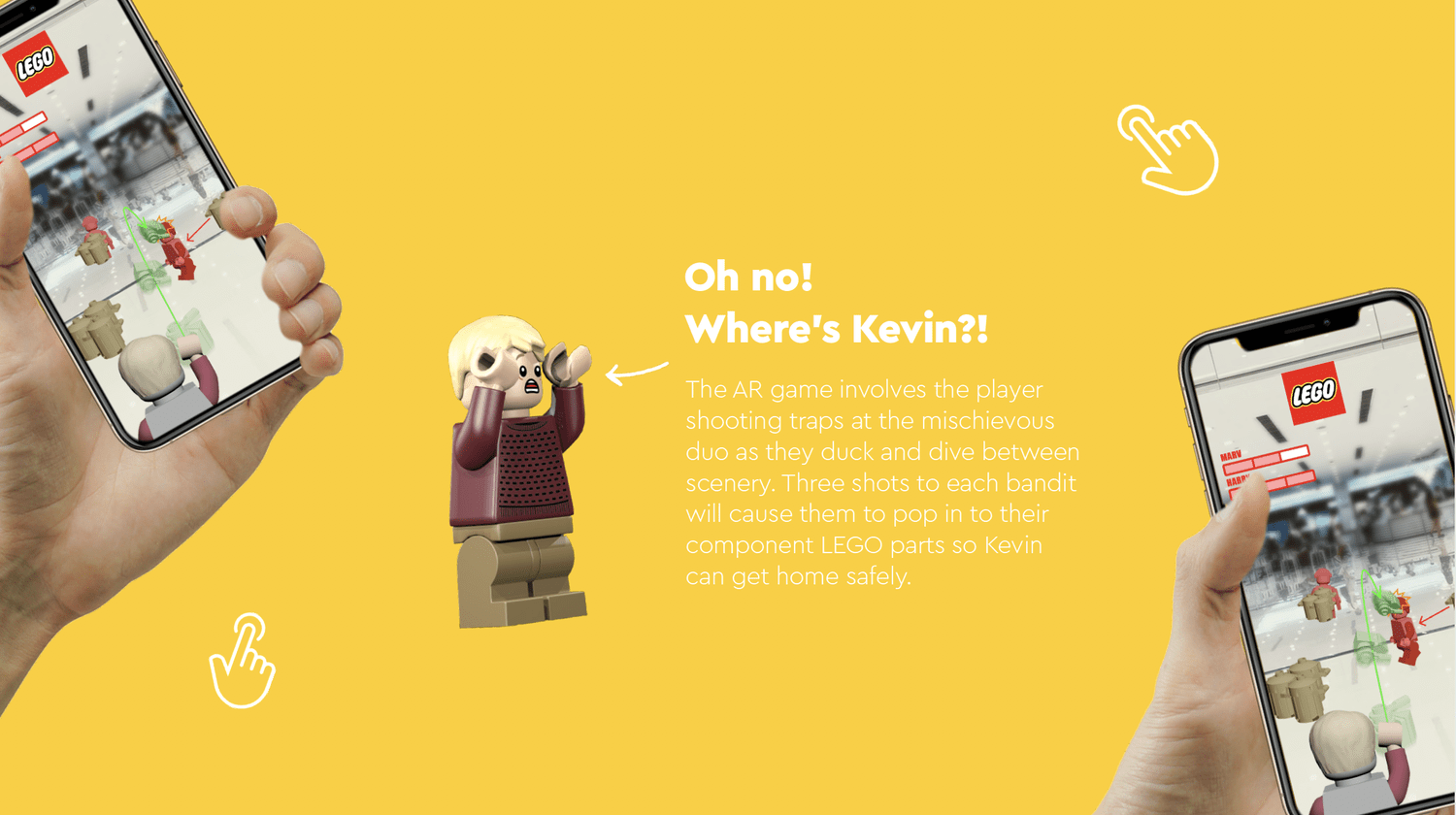
The interaction began in busy public spaces and needed to make sense within seconds. The product had to move people from scan to play with very little explanation, preserve the humour of Home Alone and balance three campaign goals: participation, competition entry and social reach.
03
Designing the scan-to-play journey
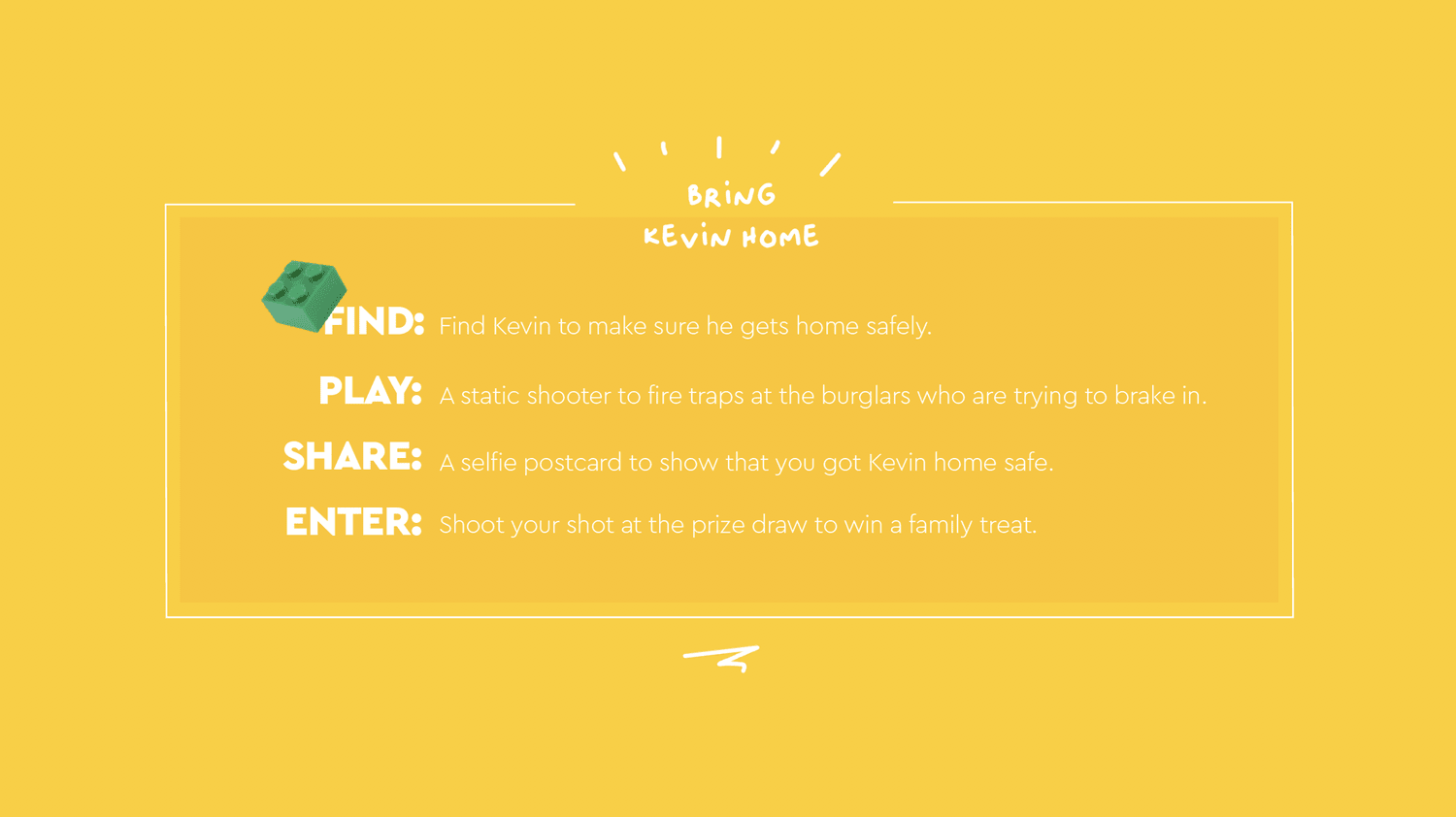
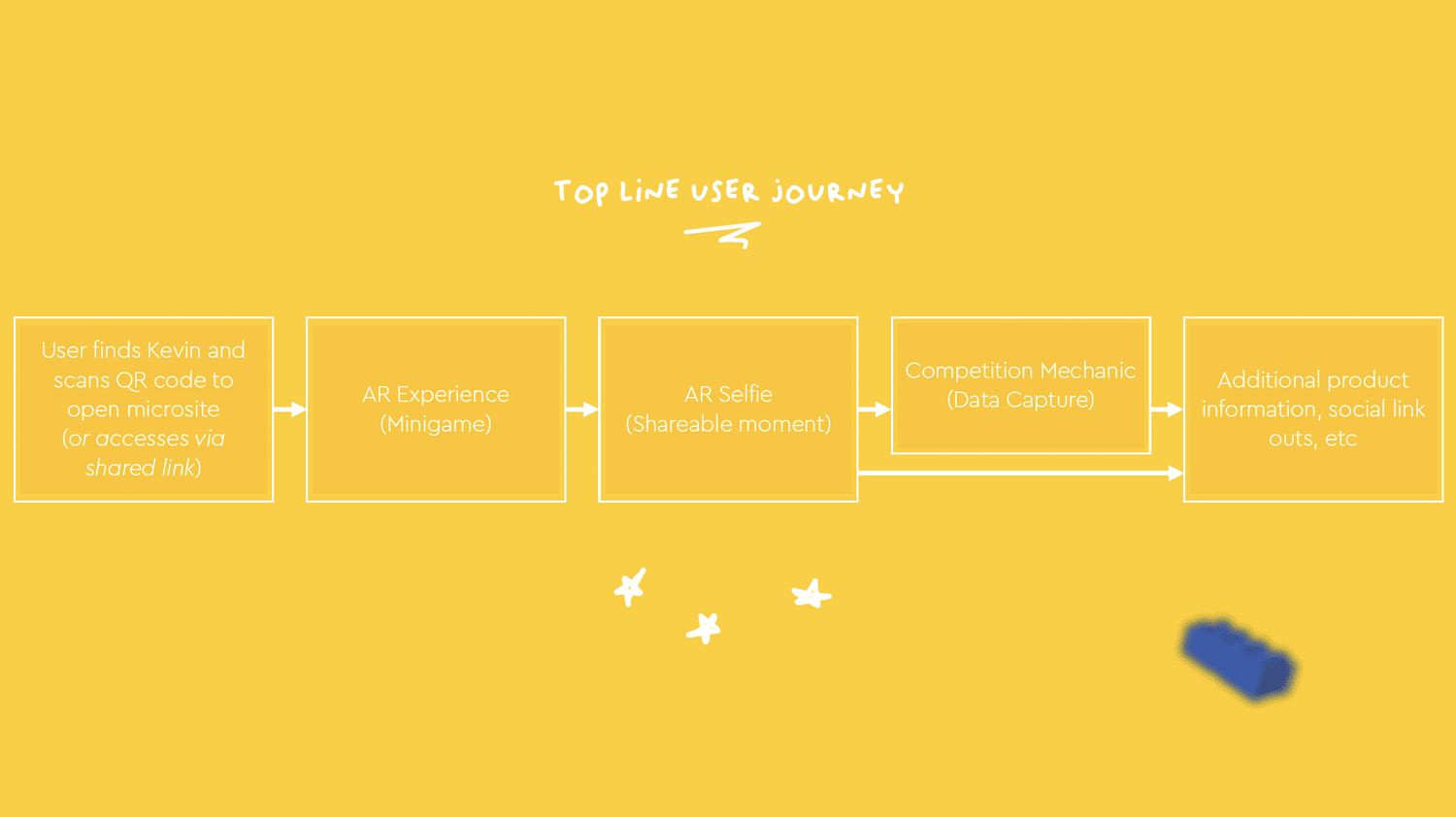
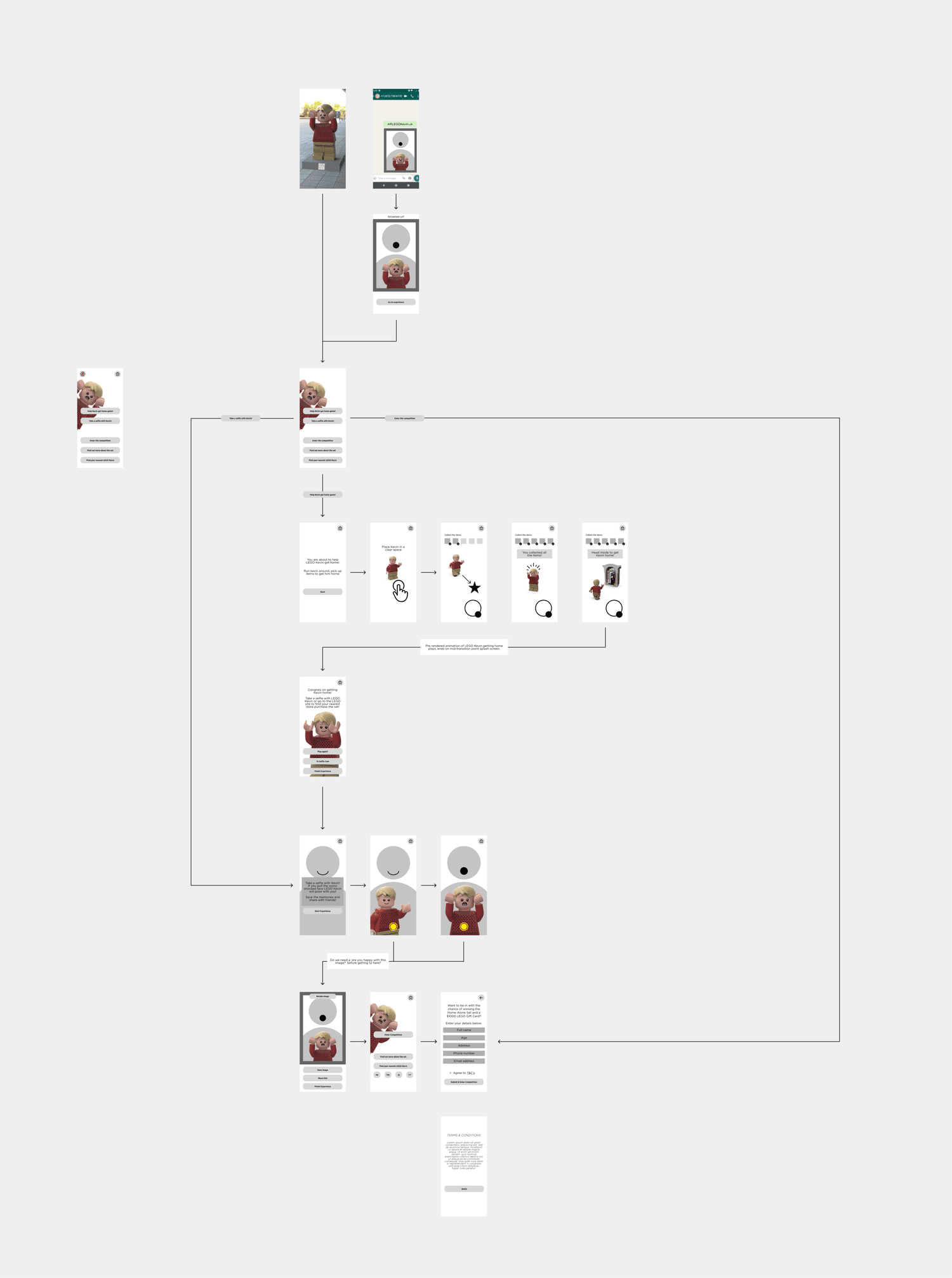
As the sole Product Designer on the web app, I mapped the primary and alternate routes from QR entry through AR gameplay. Play remained the main call to action, followed by the prize draw, while the “selfie with Kevin” feature created a natural reason to share.
04
Making the campaign feel playful everywhere
The browser-based AR game scattered findable icons through the customer’s environment, bringing familiar moments from the film into the experience. The interface kept instructions and progression clear across devices while allowing the campaign idea to remain the focus.
05
Campaign impact
The combined physical and digital experience reached a large global audience and converted attention into active participation. Results included 87,000 people finding Kevin, more than 54,000 competition entries, over 16,000 selfies and a 326% increase in visits to the LEGO Home Alone product page.
Selected details